What is a hazard?
So, a “hazard” , is anything that can potentially cause harm or damage. It’s like that dodgy situation or thing that has the potential to lead to accidents, injuries, or even mess things up.
Types of hazard
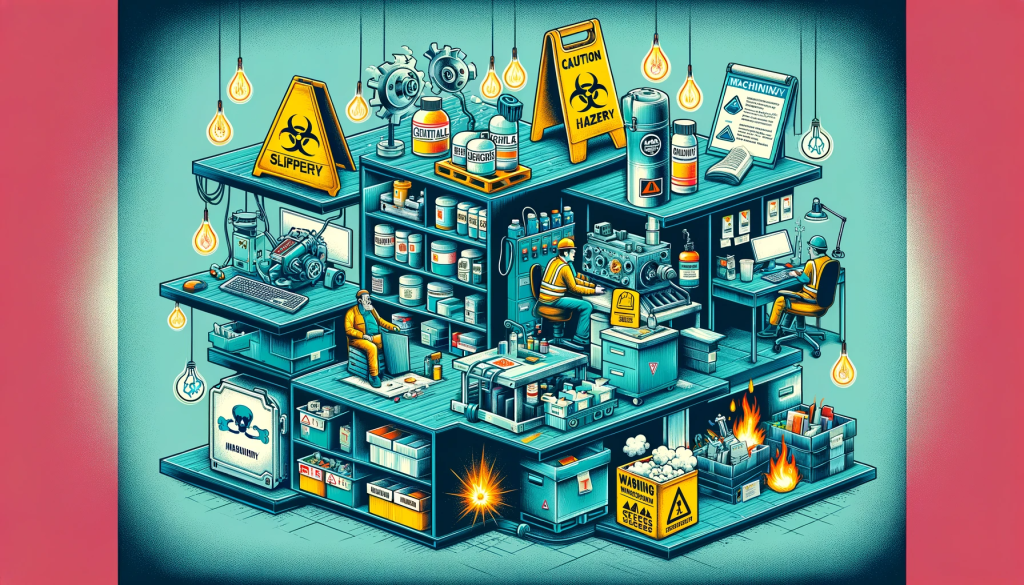
Now, hazards come in all shapes and sizes. You’ve got your:
- physical ones like slippery floors or heavy machinery,
- chemical hazards like toxic substances,
- biological ones like nasty germs, and even
- psychological hazards related to stressful work conditions.
They can pop up in various places, from construction sites to laboratories to your regular office space.
Here’s the deal, though – whether something’s a hazard or not often depends on the context. Take electricity, for instance. It’s a hazard if you start messing about with it without knowing what you’re doing, but it’s perfectly fine when you’re using it safely.
Now, why do we bother talking about hazards? Well, it’s because recognising and dealing with them is essential to keeping people and places safe.
We MUST first identify our hazards, without them, we cannot assess the risks they pose.
So, hazards may be all around us, but knowing how to spot them and manage them is key to staying out of harm’s way. Safety first, right?
Some examples of hazards
- Slippery Surfaces
- Chemicals
- Machinery
- Electricity
- Workplace Stress
 SafetyWithMe
Leave a comment